 EN
EN


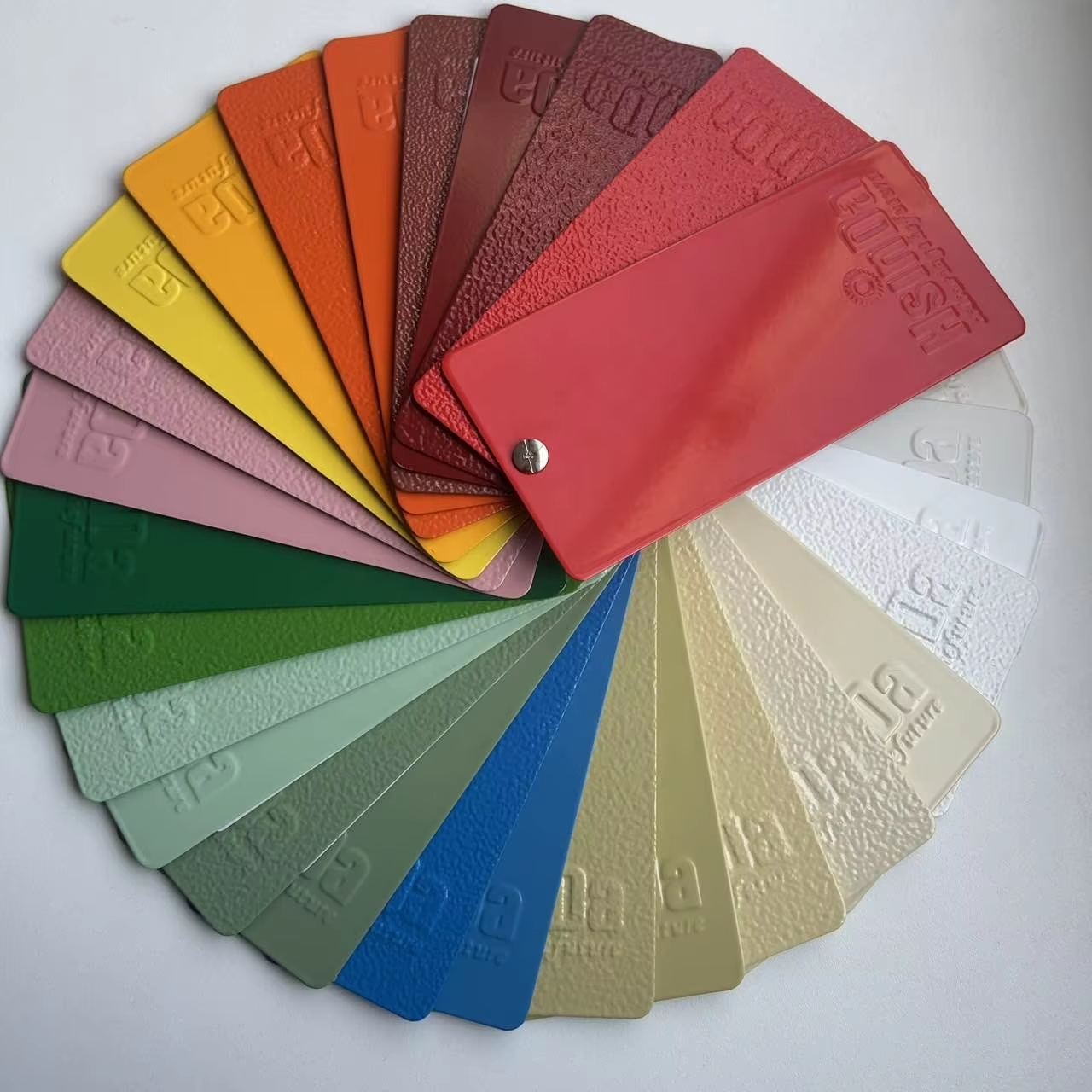
Standard Curing Time Ranges by Thermosetting Powder Coating Chemistry
Polyester, epoxy, urethane, and hybrid systems: typical time–temperature windows (160–200°C, 10–25 min)
Every thermosetting powder coating chemistry requires a precise time–temperature pairing to achieve full crosslinking. Polyester-based systems—favored for exterior durability—typically cure at 180–200°C for 10–20 minutes. Epoxy formulations, prized for corrosion resistance on interior components, generally require 160–180°C for 15–25 minutes. Hybrids (polyester–epoxy blends) balance cost and performance within a 160–190°C range over 10–20 minutes. Urethane systems—selected for flexibility and UV stability—cure at 180–200°C in 10–15 minutes. The table below summarizes these standard windows.
| Chemistry | Typical Cure Temp | Typical Cure Time |
|---|---|---|
| Polyester | 180–200°C | 10–20 min |
| Epoxy | 160–180°C | 15–25 min |
| Hybrid | 160–190°C | 10–20 min |
| Urethane | 180–200°C | 10–15 min |
Within each window, manufacturers may adjust time or temperature while maintaining equivalent crosslink density—provided the part metal temperature (PMT) reaches the specified level. Selecting the right chemistry ensures both production efficiency and long-term performance.
Low-bake and high-durability formulations: expanding flexibility for heat-sensitive substrates
Standard cure temperatures (160–200°C) risk damaging heat-sensitive substrates like MDF, plastic composites, and thin-gauge aluminum. Low-bake thermosetting powders resolve this by curing at 120–150°C—often with extended dwell times of 20–30 minutes or catalytic acceleration. While they retain strong adhesion and chemical resistance, trade-offs may include slightly reduced hardness or impact strength. Conversely, high-durability grades—engineered for extreme environments such as offshore platforms or chemical processing—operate at 200–220°C for 15–25 minutes to maximize crosslink density and barrier integrity. These expanded formulation options now enable reliable powder coating across previously incompatible substrates, without compromising on specification compliance.
Why Part Metal Temperature (PMT) — Not Oven Air Temperature — Determines True Curing Time
Many operators mistakenly initiate the cure timer when oven air reaches the target temperature. In reality, the thermosetting reaction begins only when the part metal temperature (PMT) hits the specified threshold—not the surrounding air. For instance, if a technical data sheet specifies “12 minutes at 200°C,” that dwell time starts after the part itself reaches 200°C. Oven air temperature is an unreliable proxy: heavy loads, dense racking, or thermal mass variations cause transient cooling and uneven heating. PMT reflects the actual thermal energy available to drive crosslinking—and varies significantly by part geometry and mass. Thin parts may reach target PMT in 5–10 minutes; heavy or complex assemblies can require 30+ minutes just to ramp up. This ramp-up period is not part of the cure dwell—it’s additional time that must be included in total oven residence. Ignoring PMT leads directly to undercured coatings, poor adhesion, and premature field failure. Accurate monitoring—using infrared thermometers or embedded data-logging probes—is essential, especially at the coolest zone of the part (e.g., recessed areas or shielded surfaces). Only consistent PMT tracking ensures repeatable, fully cured thermosetting powder coatings.
Key Process Variables Affecting Thermosetting Powder Coating Cure Time in Production
Thermal mass dynamics: part geometry, mass, racking density, and oven conveyor speed
Part thermal mass governs how quickly a component absorbs and retains heat during curing. Heavier or geometrically intricate parts require longer oven residence to achieve target PMT. High racking density impedes convective heat transfer—reducing efficiency by up to 40%—and demands either slower conveyor speeds or elevated oven temperatures to compensate. As a rule of thumb, each 1% increase in part mass density extends required dwell time by roughly 30 seconds for equivalent coating thickness. Conveyor speed must therefore be calibrated carefully: exceeding 5 ft/min often results in undercure when processing densely racked or thermally massive parts.
Substrate influence: steel vs. aluminum vs. galvanized zinc response to thermal energy transfer
Substrate thermal conductivity strongly influences curing kinetics. Aluminum’s high conductivity (130–150 W/mK) enables rapid heat penetration, shortening cure time by 15–20% compared to steel (45 W/mK) at equal mass. Galvanized zinc introduces interfacial thermal resistance, delaying heat transfer to the base metal and extending required exposure by ~10%. Emissivity differences further affect infrared heating efficiency: aluminum’s low emissivity (0.04–0.06) demands higher radiant intensity than steel (0.35–0.45) in IR or hybrid ovens—especially in mixed-substrate batches.
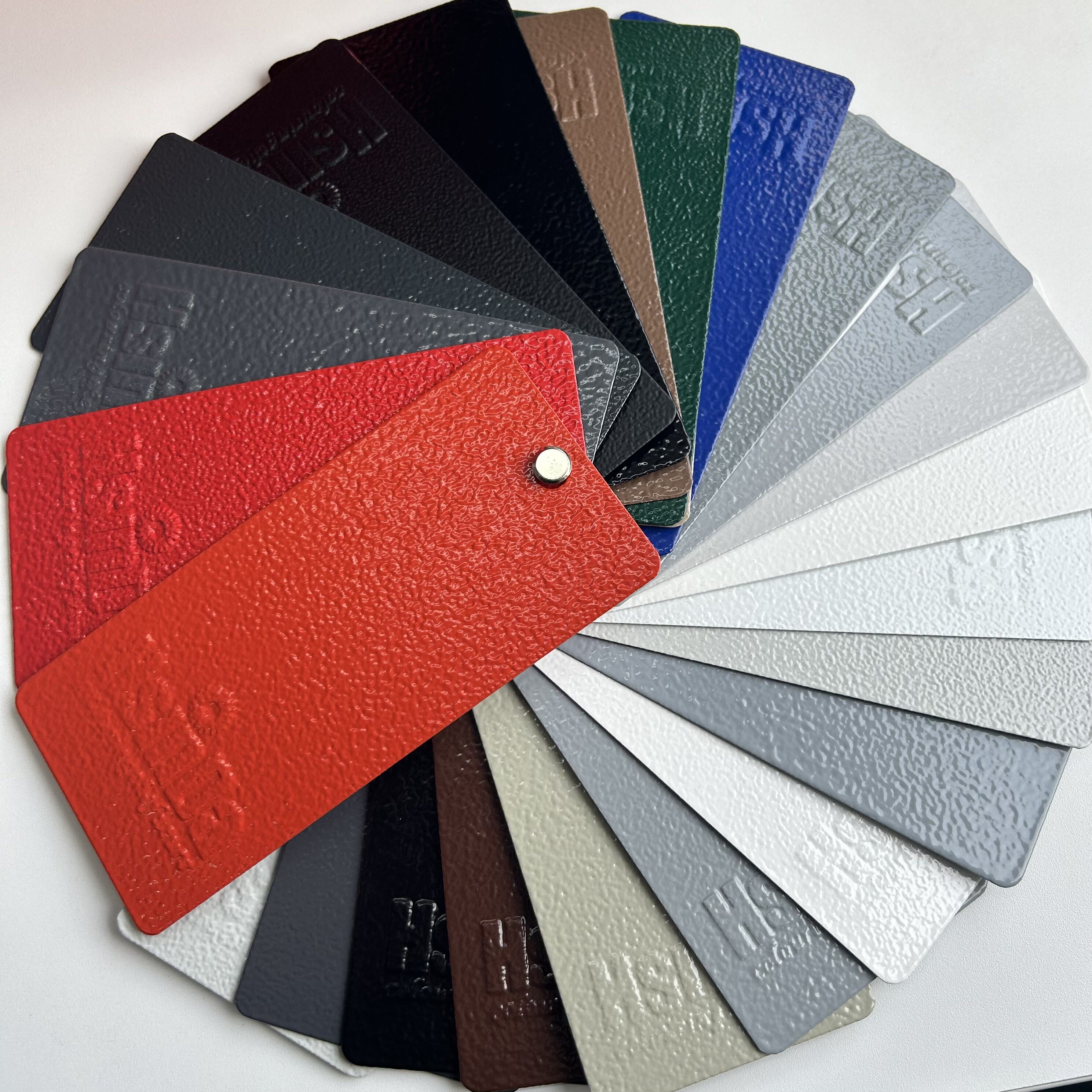
Curing Kinetics and Performance Trade-offs in Thermosetting Powder Coating
Curing kinetics in thermosetting powder coatings follow the time–temperature equivalence principle, commonly modeled using the Arrhenius equation. This allows engineers to predict crosslink conversion across different schedules—for example, confirming that 180°C for 15 minutes delivers equivalent network development as 200°C for 8 minutes, assuming constant activation energy. Differential scanning calorimetry (DSC) and rheological analysis validate these models in real-world settings. Such understanding supports intelligent process adjustments—like compensating for minor oven fluctuations or varying part thickness—without sacrificing film integrity.
However, deviating from the optimal cure window carries distinct risks. Undercuring yields an incomplete polymer network, resulting in poor adhesion, reduced flexibility, and diminished corrosion resistance. Overcuring degrades the network through chain scission and oxidation, causing embrittlement, chipping, and loss of impact strength. Common field failures—including delamination, microcracking, and accelerated weathering—are frequently traced to inconsistent PMT control or dwell time deviations. Robust process control therefore hinges on maintaining both temperature and time within the manufacturer’s validated window—supported by real-time PMT monitoring and comprehensive oven profiling. This discipline ensures the coating achieves its full mechanical, aesthetic, and protective potential.
Table of Contents
- Standard Curing Time Ranges by Thermosetting Powder Coating Chemistry
- Why Part Metal Temperature (PMT) — Not Oven Air Temperature — Determines True Curing Time
- Key Process Variables Affecting Thermosetting Powder Coating Cure Time in Production
- Curing Kinetics and Performance Trade-offs in Thermosetting Powder Coating